Category: personal
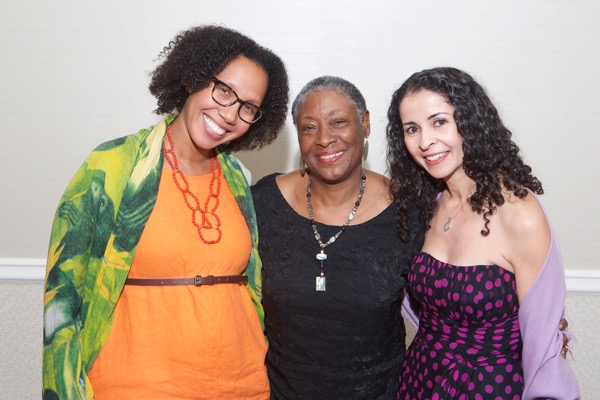
I’m thrilled to report that The Moor’s Account has won the Hurston/Wright Legacy Award in fiction. I was not expecting the novel to take the prize—there were so many great books in consideration—but it was a special treat to see it being recognized at the Washington, DC gala. The other two finalists were Tiphanie Yanique (picture above, left) and Roxane Gay.
In other news, I had a new essay on the theme of ‘unforgettable meals’ in The New York Times Magazine this week. Here’s how it starts:
Moha, who wanted to be our guide, said it was an easy hike to the Bridge of God. But he looked about 15 and spoke in a timid voice that made me doubt how easy it would really be. We were at the trailhead in Akchour, a small village nestled in the Rif Mountains in northern Morocco. ‘‘How long will it take?’’ my daughter asked.
I translated her question into Arabic for Moha. ‘‘It depends how fast we walk,’’ he replied. ‘‘With small children, three or four hours.’’ The adults in our party were eager to do the hike; the children, not so much. Something is always lost in translation, but as Salman Rushdie once put it, something can also be gained. ‘‘Only a couple of hours,’’ I said in English.
You can read the rest here.
I’ll be closing my fall tour with an event in Santa Fe, New Mexico, where I’ll be in conversation with the novelist Aminatta Forna for the Lannan Foundation. Tickets for the event are available here.
(Photo credit: Don Baker / Hurston Wright Foundation.)
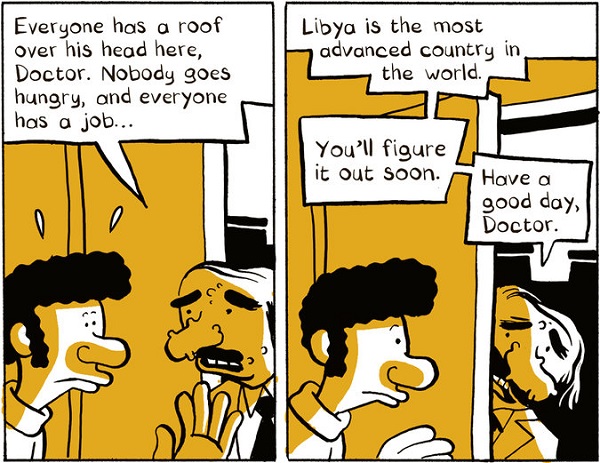
What a busy couple of weeks! I’ve been traveling, talking, and teaching almost nonstop. I’m enjoying it tremendously, but I do long for the end of the year, when things will quiet down a bit. In the meantime, I wanted to share my review of a new graphic memoir by Riad Sattouf, a former cartoonist for Charlie Hebdo. Here’s how it closes:
Already a success in France, “The Arab of the Future” will do little to complicate most people’s perceptions of Libya or Syria. Life in both countries seems like a living hell, with no moments of relief or pleasure. But this book also has occasional flashes of beauty. When Abdel-Razak comes across a mulberry tree in Tripoli, the taste of its fruit, like that of Proust’s fabled madeleine, takes him back to the carefree days of his childhood, days when the future was still full of possibility.
You can read the full review in the New York Times Book Review. Let’s see, what else? I will be on the fiction faculty at the Bread Loaf Writers’ Conference in Middlebury, Vermont, next August. Register early! I am judging the PEN/Bellwether Prize, with Kathy Pories and Brando Skyhorse. Rules and eligibility are posted here. And I found out that I’ve been included in a list of the world’s 500 Most influential Muslims. I’ll raise a glass to that!
Photo credit: From The Arab of the Future via The New York Times.
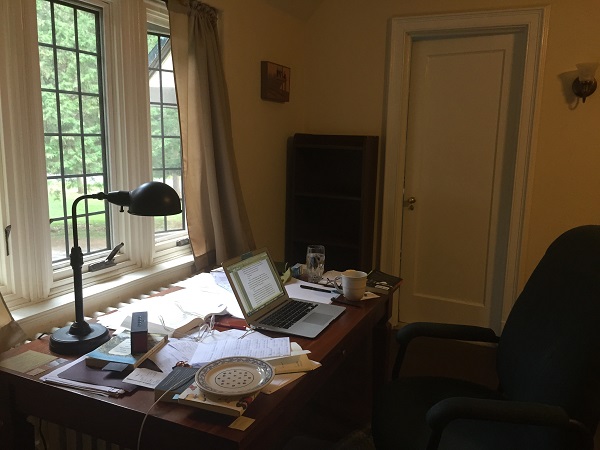
I spent a month at Yaddo Colony, in upstate New York, working on my new novel. The grounds were beautiful, but also filled with mosquitoes and ticks. Most of the time, I forgot to wear insect repellent. I swam in the pool that John Cheever built. I didn’t have to make a meal, scrub a sink, pick up the mail, or take out the trash. I walked alone. I missed my husband. I missed him so much I cried. I watched several news cycles from afar. (The Confederate flag came down. The Iran nuclear deal was signed. The Saudi government continued bombing Yemen, to almost universal indifference. The Syrian refugee crisis worsened. There was another mass shooting. Another case of police abuse. A clown decided to run for president.) I found that the world got by without my taking note of every piece of news, much less my commenting on it. I read a lot. I wrote a lot.
In July, I found out that The Moor’s Account had won the American Book Award and the Arab American Book Award, and that it was longlisted for the Man Booker Prize. Reviews in the UK began to appear, including in The Guardian, The Independent, and The Financial Times.
This summer, I also published a personal essay about my grandmother’s good luck charm in The New York Times Magazine. In August, my review of Amitav Ghosh’s Flood of Fire, the final volume in his Ibis trilogy, appeared in The New York Times Book Review. I also took part in a Room for Debate forum on diversity in core humanities courses.
But all this was mostly white noise, as I spent the majority of my time working on my book. I’m trying to get as much done as I can before I have to resume teaching later this month. I will also be on the road in the fall, and you can find out more about my upcoming events here.

Summer is here. I am spending it working on my new novel, so things are likely to be very quiet on this blog and on my social media accounts for a while. But I did want to mention that my review of Kamel Daoud’s The Meursault Investigation, an inventive retelling of Albert Camus’ The Stranger from the point of view of the victim’s brother, appeared on the cover of the New York Times Book Review earlier this month.
Also, The Moor’s Account will come out in paperback in the U.S. on August 18 and in the U.K. on August 27. I will be going on book tour again in the fall. Check the events page for details.
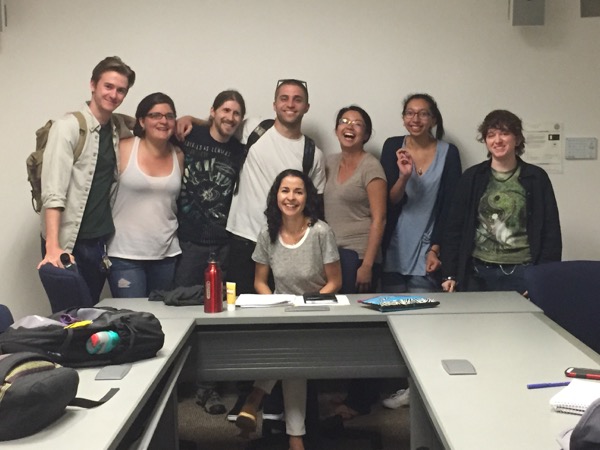
I was teaching an undergraduate fiction workshop yesterday when I received a text from my friend Mark congratulating me. “On what?” I asked. I had no idea what he was talking about. Then I found out that The Moor’s Account was named a finalist for the Pulitzer Prize in fiction, along with Richard Ford’s Let Me Be Frank With You and Joyce Carol Oates’s Lovely, Dark, Deep. The winner was Anthony Doerr for All The Light We Cannot See. In shock, I blurted out the news to my students, who erupted in applause and cheers.
I’m thrilled and grateful for this recognition, and I am especially honored to be included in such fine company. When I came across the story of Mustafa/Estebanico six years ago, I immediately knew it had to be told in the form of a novel, but I worried that I did not have the talent to do it and that, even if I did somehow pull it off, no one would care about it. But this character simply wouldn’t let go of me, so I took a leap. I wrote the book I wanted to write, with no expectation of it ever finding a readership or garnering any attention. But, oh, it’s so nice when that happens! My heartfelt thanks to the Pulitzer Prize fiction judges.
Last week, The Moor’s Account was also named a finalist for the Hurston/Wright Legacy Award in fiction, a national prize for published writers of African descent. The other nominees are Chris Abani’s The Secret History of Las Vegas, Ishmael Beah’s Radiance of Tomorrow, Roxane Gay’s An Untamed State, Nadifa Mohamed’s The Orchard of Lost Souls, and Tiphanie Yanique’s Land of Love and Drowning. The winner will be announced at a ceremony in Washington, DC, in October.
I’m popping back on the blog for a couple of announcements. The audio book of The Moor’s Account, read by Neil Shah, was released by Audible last month. UK rights to the book have sold to Mitchell Albert at Garnet, with publication scheduled for August 2015, which will coincide with the paperback release of the book with Vintage, here in the U.S. And I am back on the road again! I will be doing two events at the Tennessee Williams Festival in New Orleans. Details below:
March 27, 2015
10:30 AM
Deceptive Histories, Truthful Fictions
Tennessee Williams New Orleans Literary Festival
The Historic New Orleans Collection
New Orleans, Louisiana
March 28, 2015
11:30 AM
Panel: The Transnationalists – American Writers on Border Crossings
Molly Crabapple, Phil Klay, Laila Lalami, moderated by Pamela Paul
Tennessee Williams New Orleans Literary Festival
Hotel Monteleone, Queen Anne Ballroom
Then, in April, I will be doing a panel at the Los Angeles Times Festival of Books.
April 19, 2015
12:30 PM
Fiction: Untold Stories
Ryan Gattis, Laila Lalami, Atticus Lish, Nina Revoyr, moderated by Michelle Franke
Los Angeles Times Festival of Books
University of Southern California
Do come by and say hi!
Photo: Morning dew on a recent hike in Solstice Canyon, Santa Monica.
