Category: personal
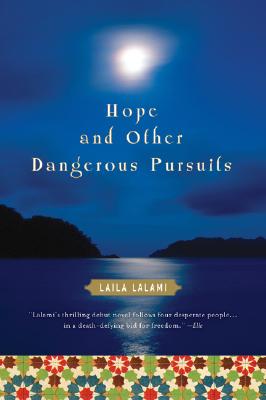
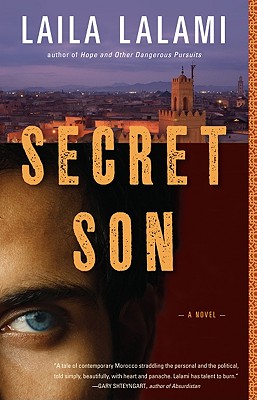
I’m happy to announce that both of my books, Hope and Other Dangerous Pursuits and Secret Son, are now available in audio format from Audible. They are narrated by the Palestinian-American actress Lameece Issaq. You can buy the CDs directly from Audible, or from Amazon (here and here).
I spent a wonderful two weeks in Oregon, where I tried to stay away from the news and did little but hang out with friends, watch movies, and sleep. I did get a chance to read a few books, among which was a very good collection of essays, recommended to me by my friend Cristina. It’s called Notes from No Man’s Land by Eula Biss, and it explores the topic of race in America with refreshing honesty. Of course, it was impossible to stay away from the news after the foiled Christmas day attack on Northwest flight 253, the bombing of Yemen, and the open calls for strip searching all Muslim men between the ages of 18 and 28.
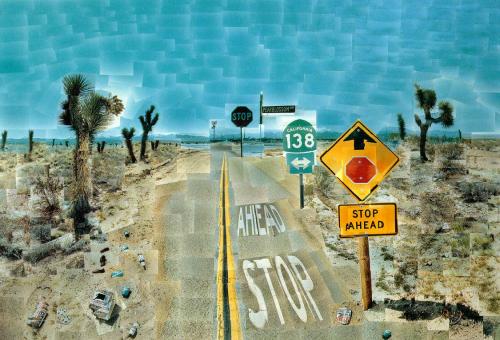
The picture above is a reproduction of Pearblossom Highway by David Hockney. The artist probably never meant for his collage of polaroids to be interpreted like this, but increasingly I feel that the world is like this little stretch of highway; one part is for people whose travel is restricted in all sorts of ways, and one part is for people who are free to move about as they want.
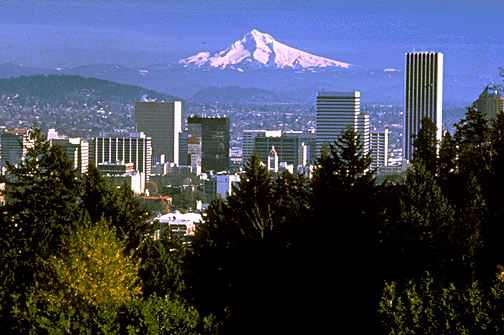
I’m in Portland for a few days, to visit family and friends, and to relax until the start of the new year. I plan to spend most of today at Powell’s.
I wrote a short opinion piece for The Nation about the Swiss minaret ban. Here’s how it begins:
When I was five years old, my parents enrolled me in Sainte Marguerite-Marie, a French grade school in a suburb of Rabat, in Morocco. The school was run by a group of Franciscan nuns who had arrived in the country during the colonial period but had stayed behind after independence. My favorite teacher was Soeur Laurette, who nurtured my love of books, and my regular tormentor was Soeur Isabelle, who, whenever I made a mistake, pulled my ponytail so hard my neck would hurt for hours.
My father, like his father before him, had memorized the Koran by the time he started his own grade school education; but he did not see any danger or contradiction in having his child attend a French school. My mother, who did not cover her hair, did not seem to have any anxiety about my spending half my day with women dressed in austere tunics and long black veils. I suppose that my parents’ guiding principle was that they had to choose the best neighborhood school. The fact that it happened to be run by Catholics did not scare them–they understood that being in daily contact with another religion is not dangerous. It does not mean you will be converted. It does not mean that you will have to change. Religion is not passed through the air you breathe or the sidewalk you tread or the classroom you share.
You can read the rest of the article here.
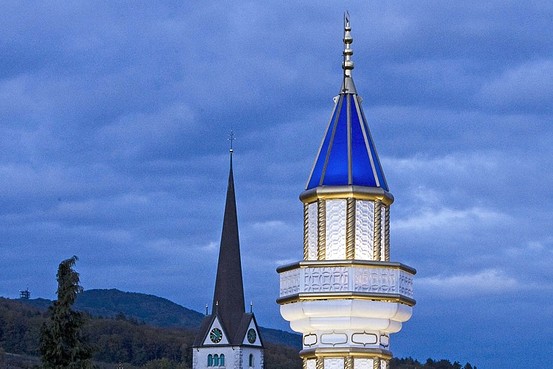
(Photo: Minaret in Wangen bei Olten. Via: Reuters.)
I have a new essay in December 14th issue of The Nation magazine, which just went up online. It’s about the spate of books that claim that Europe is headed to its demise because of its rising Muslim population, with a particular focus on the most recent exemplar, Christopher Caldwell’s Reflections on the Revolution in Europe: Immigration, Islam and the West. Here is how it begins:
At a literary festival in New York City some years ago, I was introduced to a French writer who, almost immediately after we shook hands, asked me where I was from. When the answer was “Morocco,” he put down his drink and stared at me with anthropological curiosity. We spoke about literature, of course, and discovered a common love for the work of the South African writer J.M. Coetzee, but before long the conversation had turned to Moroccan writers, then to Moroccan writers in France, and then, as I expected it eventually would, to Moroccan immigrants in France–at which point the French writer declared, “If they were all like you, there wouldn’t be a problem.”
His tone suggested he was paying me some sort of compliment, though I found it odd that he would want the 1 million Moroccans in his country to be carbon copies of someone he had barely met and whose views on immigration–had he asked about them–he might not have found quite to his liking. It was only later, when I had returned to my hotel room, that it dawned on me that the profile of the unproblematic Moroccan immigrant he might have had in mind was based solely on conspicuous things. Some of these, like skin color, were purely accidental; others, like sartorial choices or dietary practices, were in my opinion inessential, but from his vantage point perhaps they suggested a smaller degree of “Muslimness.”
Was this man really suggesting that I was a more desirable immigrant because I did not look Muslim? We had started our conversation as two equals, two potential friends, two writers discussing literature, but we had ended it as judge and supplicant–the former telling the latter whether or not she would make a suitable immigrant. And why on earth did I not say something on the spot? Why did I not ask him what he meant? Instead, I had stared back at him with what I imagine was dumbfounded perplexity, and then changed the subject. Perhaps if I had confronted him I would have been able to remove the sting of the insult that had lain hidden inside the compliment.
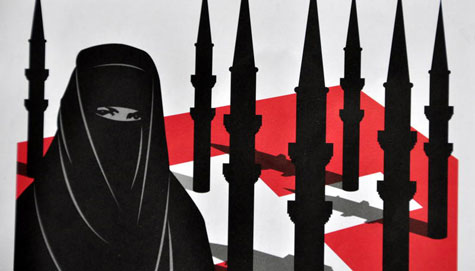
You can read the essay, in full, here. The picture above is from an election poster by the Swiss People’s Party, which recently led a campaign to ban the construction of minarets in Switzerland. In a referendum held yesterday, the Swiss people approved the proposed law. It is now set to become part of the Swiss constitution.
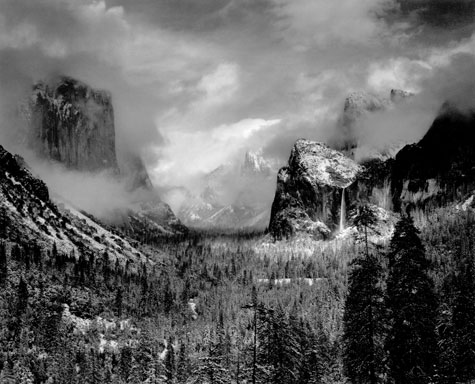
We’re spending the Thanksgiving holiday at Yosemite National Park. I hope everyone has a safe and happy weekend. See you back here on Monday.