News
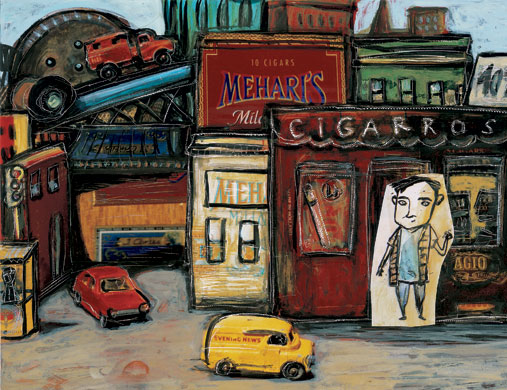
The Guardian has published a gallery of twelve beautiful pictures, which accompany a new edition of Paul Auster’s famed “Auggie Wren’s Christmas Story.” The story first appeared in the New York Times in 1990, and has been reprinted many times since. You can listen to Paul Auster read it on NPR. And of course the character of Auggie Wren appears in another Auster production, the film Smoke, which starred Harvey Keitel.
Illustration: ISOL/Faber and Faber
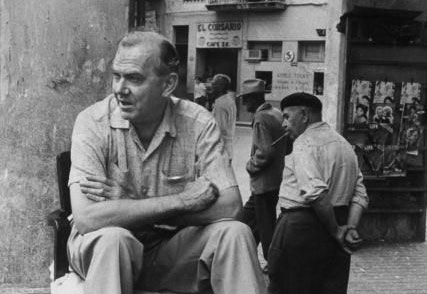
According to a new poll by the Pew Research Center poll, 54% of Americans believe that the use of torture to gain information from suspected terrorists (note the adjective) is often or sometimes justified. This represents an increase since the last time the question was asked (49% in April and 44% in February.) Which reminds me of this passage from Graham Greene’s Our Man in Havana, where Captain Segura explains who can and can’t be tortured:
‘Did you torture him?’
Captain Segura laughed. ‘No. He doesn’t belong to the torturable class.’
‘I didn’t know there were class-distinctions in torture.’
‘Dear Mr Wormold, surely you realize there are people who expect to be tortured and others who would be outraged by the idea. One never tortures except by a kind of mutual agreement.’
‘There’s torture and torture. When they broke up Dr Hasselbacher’s laboratory they were torturing … ?’
‘One can never tell what amateurs may do. The police had no concern in that. Dr Hasselbacher does not belong to the torturable class.’
‘Who does?’
‘The poor in my own country, in any Latin American country. The poor of Central Europe and the Orient. Of course in your welfare states you have no poor, so you are untorturable. In Cuba the police can deal as harshly as they like with émigrés from Latin America and the Baltic States, but not with visitors from your country or Scandinavia. It is an instinctive matter on both sides. Catholics are more torturable than Protestants, just as they are more criminal. You see, I was right to make that king, and now I shall huff you for the last time.’
I had not realized that so many Americans subscribed to Segura’s philosophy.

I wrote a short opinion piece for The Nation about the Swiss minaret ban. Here’s how it begins:
When I was five years old, my parents enrolled me in Sainte Marguerite-Marie, a French grade school in a suburb of Rabat, in Morocco. The school was run by a group of Franciscan nuns who had arrived in the country during the colonial period but had stayed behind after independence. My favorite teacher was Soeur Laurette, who nurtured my love of books, and my regular tormentor was Soeur Isabelle, who, whenever I made a mistake, pulled my ponytail so hard my neck would hurt for hours.
My father, like his father before him, had memorized the Koran by the time he started his own grade school education; but he did not see any danger or contradiction in having his child attend a French school. My mother, who did not cover her hair, did not seem to have any anxiety about my spending half my day with women dressed in austere tunics and long black veils. I suppose that my parents’ guiding principle was that they had to choose the best neighborhood school. The fact that it happened to be run by Catholics did not scare them–they understood that being in daily contact with another religion is not dangerous. It does not mean you will be converted. It does not mean that you will have to change. Religion is not passed through the air you breathe or the sidewalk you tread or the classroom you share.
You can read the rest of the article here.
(Photo: Minaret in Wangen bei Olten. Via: Reuters.)
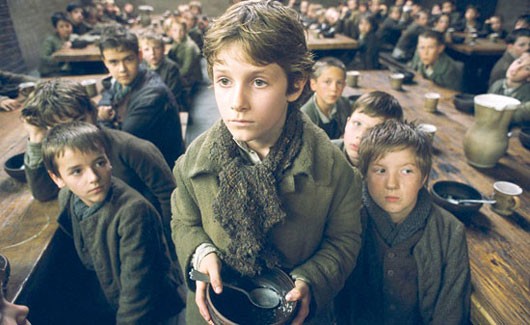
A few weeks ago, a friend of mine wrote to tell me how impressed he had been by a lecture on the challenges of social democracy that Tony Judt gave at New York University. Fortunately, the text of this talk is now available at the New York Review of Books. Here is a small excerpt
But my concern tonight is the following: Why is it that here in the United States we have such difficulty even imagining a different sort of society from the one whose dysfunctions and inequalities trouble us so? We appear to have lost the capacity to question the present, much less offer alternatives to it. Why is it so beyond us to conceive of a different set of arrangements to our common advantage?
Our shortcoming—forgive the academic jargon—is discursive. We simply do not know how to talk about these things. To understand why this should be the case, some history is in order: as Keynes once observed, “A study of the history of opinion is a necessary preliminary to the emancipation of the mind.” For the purposes of mental emancipation this evening, I propose that we take a minute to study the history of a prejudice: the universal contemporary resort to “economism,” the invocation of economics in all discussions of public affairs.
For the last thirty years, in much of the English-speaking world (though less so in continental Europe and elsewhere), when asking ourselves whether we support a proposal or initiative, we have not asked, is it good or bad? Instead we inquire: Is it efficient? Is it productive? Would it benefit gross domestic product? Will it contribute to growth? This propensity to avoid moral considerations, to restrict ourselves to issues of profit and loss—economic questions in the narrowest sense—is not an instinctive human condition. It is an acquired taste.
You can read the lecture in full here.
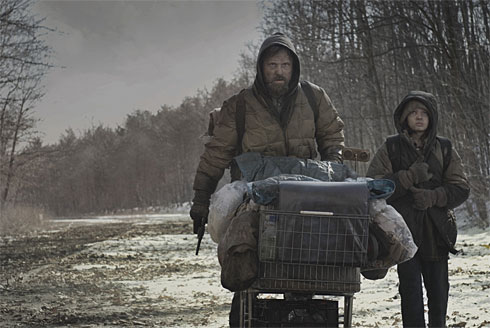
I went to see the film adaptation of Cormac McCarthy’s The Road a couple of days ago. I tried to trick myself into not expecting anything from the movie because I thought that would prevent me from being disappointed. There was anything wrong with director John Hillcoat’s work. And Viggo Mortensen delivers a fine performance (but then he nearly always does.) But I was still terribly disappointed. The problem, I think, is that there was no poetry to this movie and it simply doesn’t do justice to the novel.