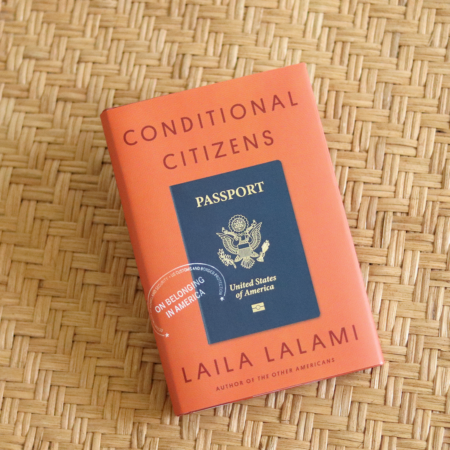
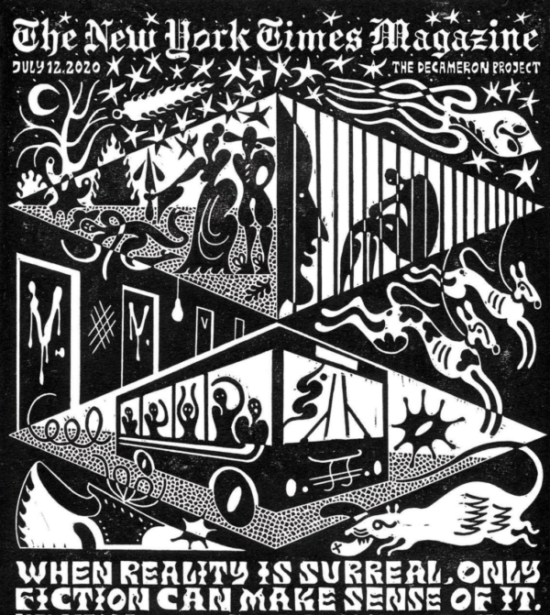
My new book, Conditional Citizens, comes out on September 22nd. It’s about belonging and unbelonging in the United States, an experience I know I share with many of you and that can be especially intense these days. An adapted excerpt appears in this weekend’s New York Times Magazine. I hope you’ll take a look and add the book to your reading list.
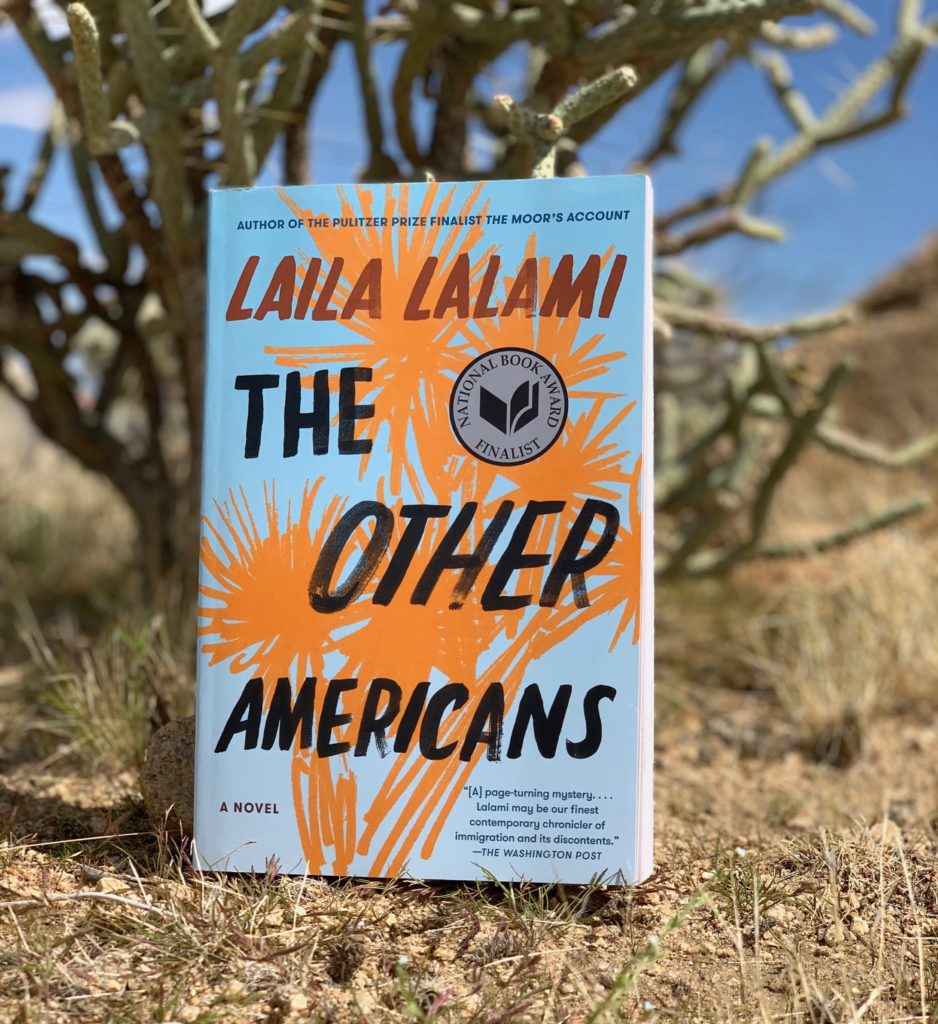
In other news, my most recent novel, The Other Americans, won the Arab American Book Award in fiction. In France, it made the longlist of the Grand Prix de littérature américaine. (The French translation was completed by Aurélie Tronchet.) New audio recordings of Hope and Other Dangerous Pursuits and Secret Son, voiced by the actor Fajer al-Kaisi, were released by Penguin Random House Audio.
In the last few weeks, I’ve been spending a lot less time online; it may take me a while to read or respond to emails and queries. I hope you’re all staying healthy, and that you’re managing to remain sane during this pandemic.
So much book stuff has happened since my last post! I wrote a new short story, “That Time At My Brother’s Wedding,” which appeared in the New York Times Magazine‘s first all-fiction issue. Contributors include Margaret Atwood, Edwidge Danticat, Victor Lavalle, Mia Couto, Kamila Shamsie, Rachel Kushner, among others. Earlier this month, my novel The Other Americans was named a finalist for the California Book Award, which was both unexpected and delightful. (There will be no live ceremony this year, though, for obvious reasons.) And before that, my first novel, Hope and Other Dangerous Dangerous Pursuits, which was originally published by Algonquin in 2005, was reissued with a handsome new cover.
In other news, the Dutch edition of The Moor’s Account, titled La Florida, will be published by Nieuw Amsterdam in August 2020. I’m very excited about this release because that book is so special to me. Elsewhere, the French edition of The Other Americans, titled Les Autres américains, will be published by Editions Christian Bourgeois in September 2020. I’m so disappointed that I won’t be able to visit France, Belgium, and the Netherlands as planned, but my hope is that travel will be possible again next summer. In the meantime, all my events are virtual.
Before the coronavirus pandemic disrupted all our lives, I was supposed to be touring to promote the paperback edition of The Other Americans, with stops in Berkeley, Pasadena, Minneapolis, Grand Forks, Arlington, New York, and Cincinnati. None of that happened, of course. We’re now seven weeks into our quarantine. Where possible, I’ve connected with readers through Zoom, which has opened up book events to people who are in different cities at once. I’m happy to engage in this way, though it doesn’t feel quite the same as a live event.
The paperback tour was to be followed by the April launch of my nonfiction book, Conditional Citizens, and tour stops in Los Angeles, New York, Greensboro, Green Bay, Ann Arbor, Madison, St. Louis, Tulsa, Tempe, Santa Fe, Washington DC, Harrisburg, and Dallas. But given that most bookstores are shuttered, my publisher decided to postpone the hardcover release until September 2020. Some things can’t be delayed, though. The April issue of Harper’s, which includes a long excerpt from Conditional Citizens, came out as scheduled, as did the May issue of Alta Magazine, which has both an excerpt and a review. Sierra Magazine also ran a review, as did the Los Angeles Review of Books.
If these early reviews of Conditional Citizens spark your interest, perhaps you’ll consider pre-ordering a copy.
I’m a firm believer that books are never late. The reading experience is not lessened by having to wait a few months more for it. In the meantime, I hope you’re staying home if you’re able, and that you’re all safe and healthy.
“Disease did not discriminate,” I wrote in my novel, The Moor’s Account. Based on a true story, the book chronicles the journey of a Spanish expedition to Florida in 1528, from the point of view of a Moroccan slave who has been brought to the new world by his master. Within weeks, the men contract dysentery and begin to die, whether from infection or from their attempts to escape the unfamiliar landscape of America. “[Disease] could strike the rich as well as the poor, the brave as well as the coward, the wise as well as the fool. Disease leveled all the differences between us and united us in a single abiding fear.”
In our modern world, where massive populations of people live in high-density areas and depend on a global economy for survival, disease can spread just as fast as in 1528, just as indiscriminately. But the costs of the COVID-19 pandemic will not be borne equally by all. Once disease spreads and quarantine becomes mandatory, the poor, the elderly, the immune-compromised, the disabled, the uninsured, the incarcerated and the detained will be hit much harder.
The coronavirus pandemic is an argument for why we need social rights, like universal healthcare, a living wage, sick leave, and free education. Imagine for a moment how the pandemic would’ve unfolded if Americans could see a doctor for free at the first sign of symptoms. Imagine if workers who are diagnosed could immediately take leave from their jobs without fear of lost wages. Imagine if students did not have to worry that an additional semester in college would mean adding tens of thousands of dollars to their mounting debt.
The mention of social rights usually triggers howls of “How will we pay for it”? But the correct question is “Who will pay for it?” In 2017, the Trump administration passed the Tax Cuts and Jobs Act, which lowered taxes for corporations, whose rate went from 35% to 21%. It was the biggest one-time reduction in corporate tax in American history. But as the budget deficit ballooned, it soon became clear who would pay for these tax cuts. Last year, for example, Trump proposed cuts to Social Security, Medicare, and Medicaid.
The COVID-19 pandemic will worsen all of the problems that fester in U.S. society right now: expensive healthcare, income inequality, mass incarceration, immigration detention, etc. We need a national guarantee of social rights. The time to act is now.